
Carrying the Load: taking the logistics off her plate
Fertility treatment is a second job. Beyond the shots and appointments, there's a constant stream of things to track: insurance approvals, pharmacy orders, bills, consent forms, test results, calendar changes, and calls that have to be returned during work hours. Most of it lands on her by default, because the clinic calls her phone and the patient portal is in her name. She's already carrying the physical side. The paperwork doesn't have to be hers too.
One thing to know: Helping when she asks still leaves her as the manager. The goal is to own whole tasks from start to finish, so she doesn't have to think about them, remind you, or check that they got done.
What's on her list
Scheduling and rescheduling appointments around work
Insurance calls, prior authorizations, and appeals
Pharmacy orders, refills, and deliveries
Bills, payment plans, and receipts
Consent forms and the patient portal
Remembering what the nurse said and what happens next
Everything at home that was already there before treatment started
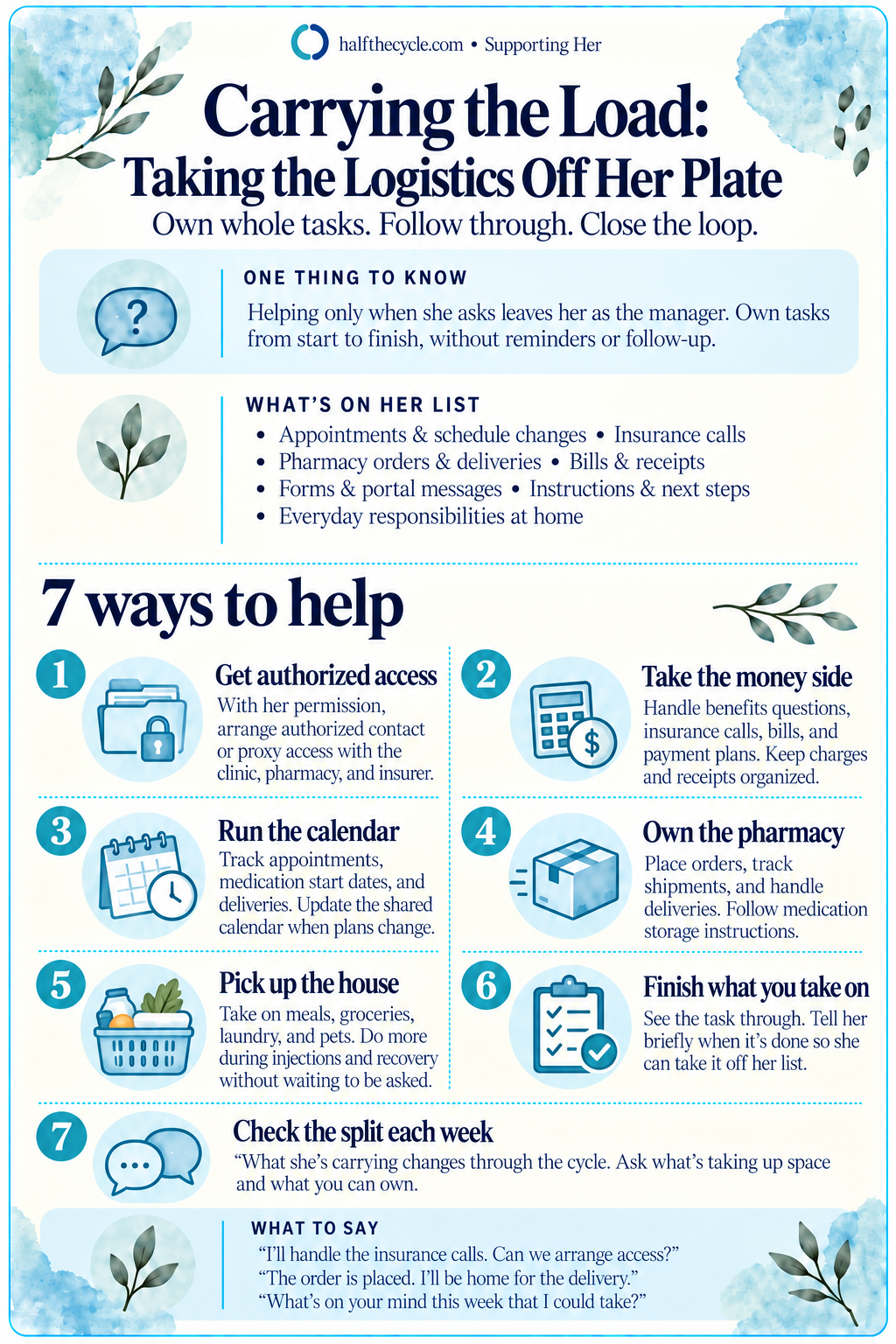
What helps
1. Get access
Ask her to add you as an authorized contact with the clinic, the pharmacy, and the insurance company. Without her permission on file, most offices can't talk to you, and you can't take anything over.
2. Take the money side
Make the insurance calls, check the benefits, and handle the bills and payment plans. Keep one folder or spreadsheet with every charge and what's been paid, and save receipts for taxes or an HSA or FSA if you have one.
3. Run the calendar
Set up a shared calendar with every appointment, medication start date, and delivery. Update it when the clinic changes the plan, which will happen more than once.
4. Own the pharmacy
Place the orders, track the shipments, and be home for deliveries that need a signature or a refrigerator. Prices can vary between pharmacies, so it's worth a call to compare.
5. Pick up the house
Meals, groceries, laundry, pets. Do more of all of it, especially during injections and after retrieval. Don't wait to be asked, and don't ask what's for dinner.
6. Finish what you take on
A task she has to follow up on is still on her list. See it through, then tell her in one line that it's done.
7. Check the split every week
What she's carrying changes as the cycle moves. Once a week, ask what's on her mind that you could take.
What to say
"I'm taking over the insurance calls. Can you add me to the account?"
"The pharmacy order is placed. It arrives Thursday, and I'll be home for it."
"What's taking up space in your head this week that I could take?"
The bottom line
She can't hand off the injections, the procedures, or the waiting. Almost everything else can be yours. Take whole jobs, see them through, and tell her when they're done. The less she has to manage, the more energy she has for the part only she can do.