
Body Changes: when she doesn’t feel like herself
Treatment changes how her body looks and feels, often within days. Her abdomen swells, her clothes stop fitting, there are bruises from the shots, and she's more tired than she's ever been. On top of that, her body is being measured, scanned, and discussed by strangers several times a week. Many people say that at some point in treatment, their body stops feeling like their own. It's easy for a partner to miss, because she may never say it out loud.
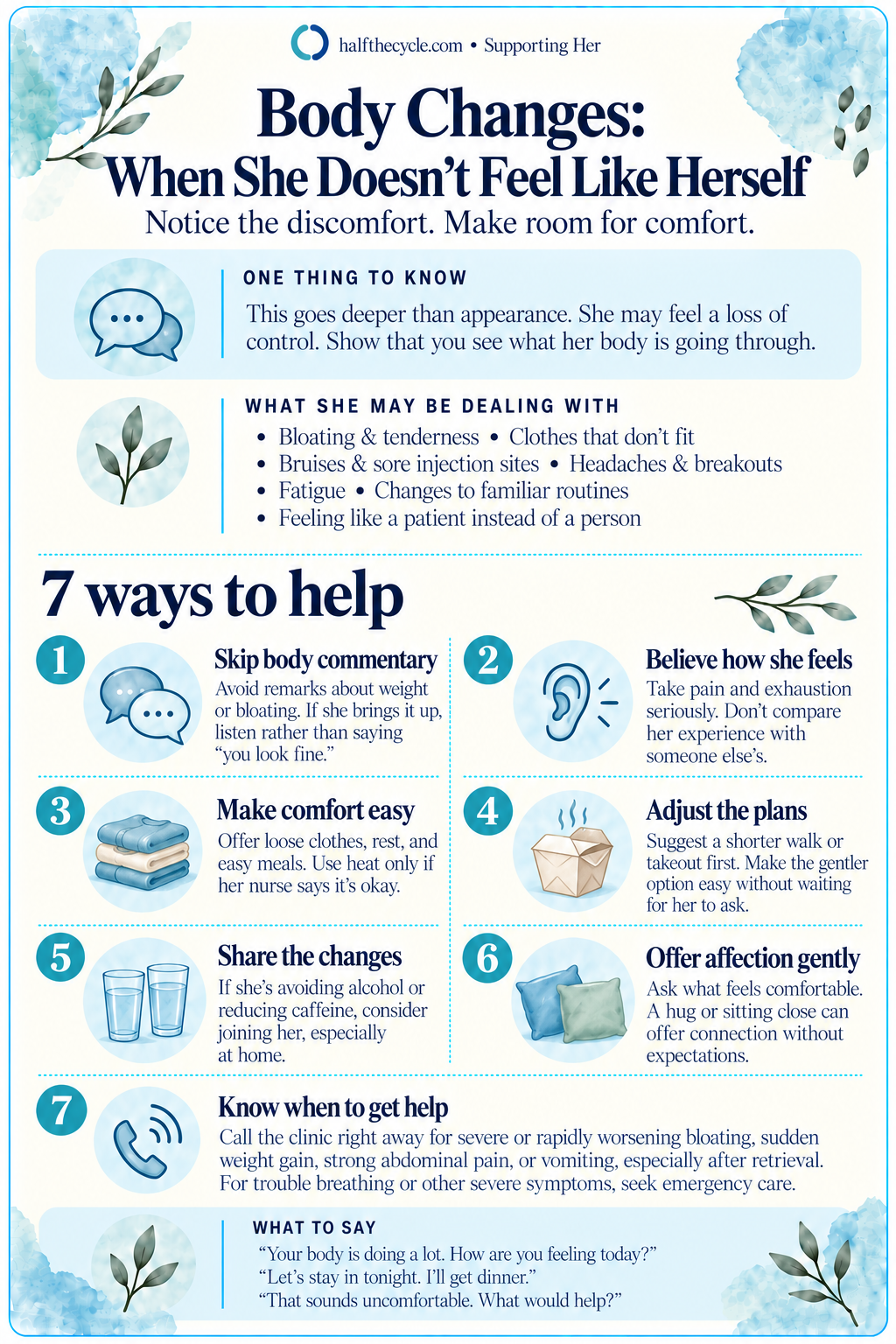
One thing to know: This goes deeper than appearance. A lot of what she's feeling is a loss of control, and sometimes a sense that her body has let her down. Telling her she looks fine helps less than showing her you see what her body is going through.
What she may be dealing with
Bloating and a swollen, tender abdomen
Weight changes and clothes that don't fit
Bruises and sore spots from injections
Breast tenderness, headaches, and breakouts
Deep fatigue
Limits on exercise, alcohol, and caffeine, which may be how she normally copes
Feeling like a patient instead of a person
What helps
1. Don't comment on her body
Even neutral or joking remarks about bloating or weight can sting. If she brings it up, listen and agree that it's hard. Skip "you look fine."
2. Believe her about how she feels
If she says she's exhausted or hurting, take it at face value. Don't measure it against what the clinic called normal or what someone else went through.
3. Make comfort easy
Loose clothes, early nights, favorite foods, a heating pad if her nurse says it's okay. If her clothes are uncomfortable, encourage her to get a few things that fit right now, and treat it as no big deal.
4. Change plans before she has to ask
Trade the hike for a short walk and the dinner out for takeout. Suggest the low-key option first, so she isn't always the one cancelling.
5. Join her in the restrictions
If she's off alcohol or cutting back on caffeine, do it with her, at least at home. It's a small thing that says you're in this together.
6. Show affection with no agenda
A hug, a hand on her back, sitting close on the couch. Touch that has nothing to do with treatment or symptoms reminds her that her body is more than a medical project.
7. Know when to call the clinic
Some discomfort is expected. Severe or fast-worsening bloating, sudden weight gain, strong abdominal pain, trouble breathing, or vomiting are different, especially after retrieval. Call the clinic right away, and offer to make the call if she's playing it down.
What to say
"Your body is doing a huge amount right now. How are you feeling today?"
"Let's stay in tonight. I'll get dinner."
"That sounds really uncomfortable. What would help?"
The bottom line
Her body is doing the hardest work of treatment, and she feels every bit of it. You can't take the discomfort away. You can notice it, make her days physically easier, and remind her she's more than what's happening to her body right now.