
Sperm Collection Day: what to expect
On IVF retrieval day or IUI day, most of the attention is on her, and it should be. But there's another appointment happening that morning, and it's yours. Your sample is half of what goes into the lab, and the timing matters. It can feel awkward, even a little funny, and that's normal.
Here's exactly how it works, so you can walk in knowing what to do and get back to her side.
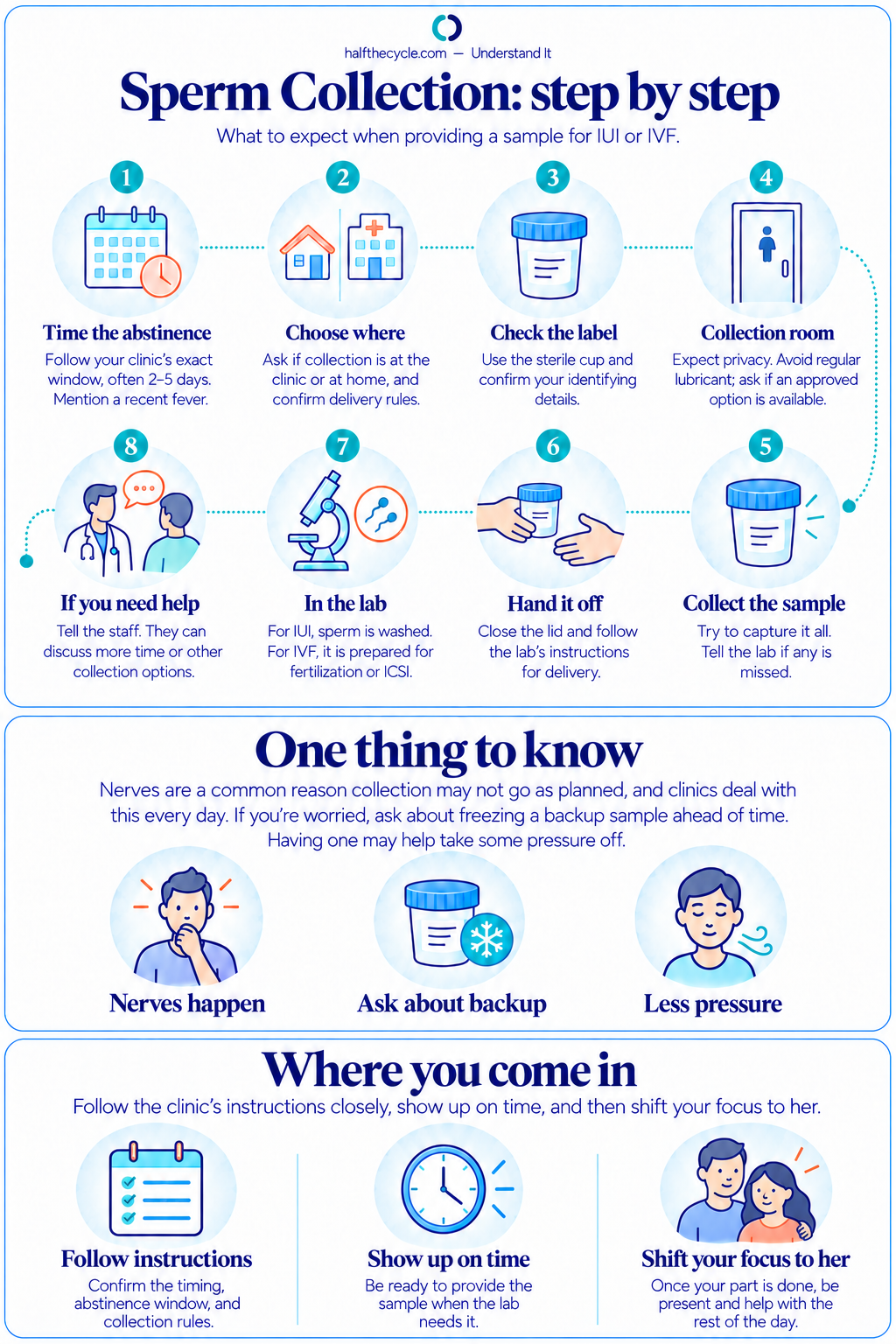
A few days before: timing your abstinence
Most clinics ask you to avoid ejaculation for about 2–5 days before collection. Too short or too long can affect the sample, so follow your clinic's exact window. In the week or two before, it also helps to skip hot tubs and saunas and let the clinic know if you get sick with a fever.Know your plan: clinic or home collection
Most clinics have a private collection room. Some allow collection at home if you live close enough to deliver the sample quickly, usually within 30–60 minutes and kept at body temperature (an inside jacket pocket works). Ask which option they offer and what the delivery rules are.Check in and get your cup
The lab will confirm your ID and give you a sterile, labeled container. Double-check the label. This is one of several identity checks the clinic does to make sure the right sample goes with the right eggs.The collection room
Expect a small, private room, often with a chair, sink, and sometimes a TV or reading material. Wash your hands first. Avoid regular lubricants, lotion, or saliva, since they can harm sperm. If you need lubricant, ask the clinic for an approved one.Collect the whole sample
Aim to get everything into the cup. The first portion usually contains the most sperm, so if any spills, tell the lab rather than worry about it quietly. They'd much rather know.Hand it off
Close the lid, fill out any form they give you, and leave the sample where the lab instructs. You're done with your part. Seriously, that's it.What happens in the lab
For IUI, the lab "washes" the sample to separate the healthiest, most active sperm, which usually takes about 1–2 hours before the procedure. For IVF, the embryologists prepare the sample and use it the same day to fertilize the eggs, either by mixing them together or by injecting a single sperm into each egg (ICSI).If it doesn't go as planned
It happens more often than you'd think. Tell the staff. They may give you more time, suggest home collection, or use a backup frozen sample if you have one. There's no judgment here, just a problem the lab knows how to solve.