
Male Factor Infertility: what it means
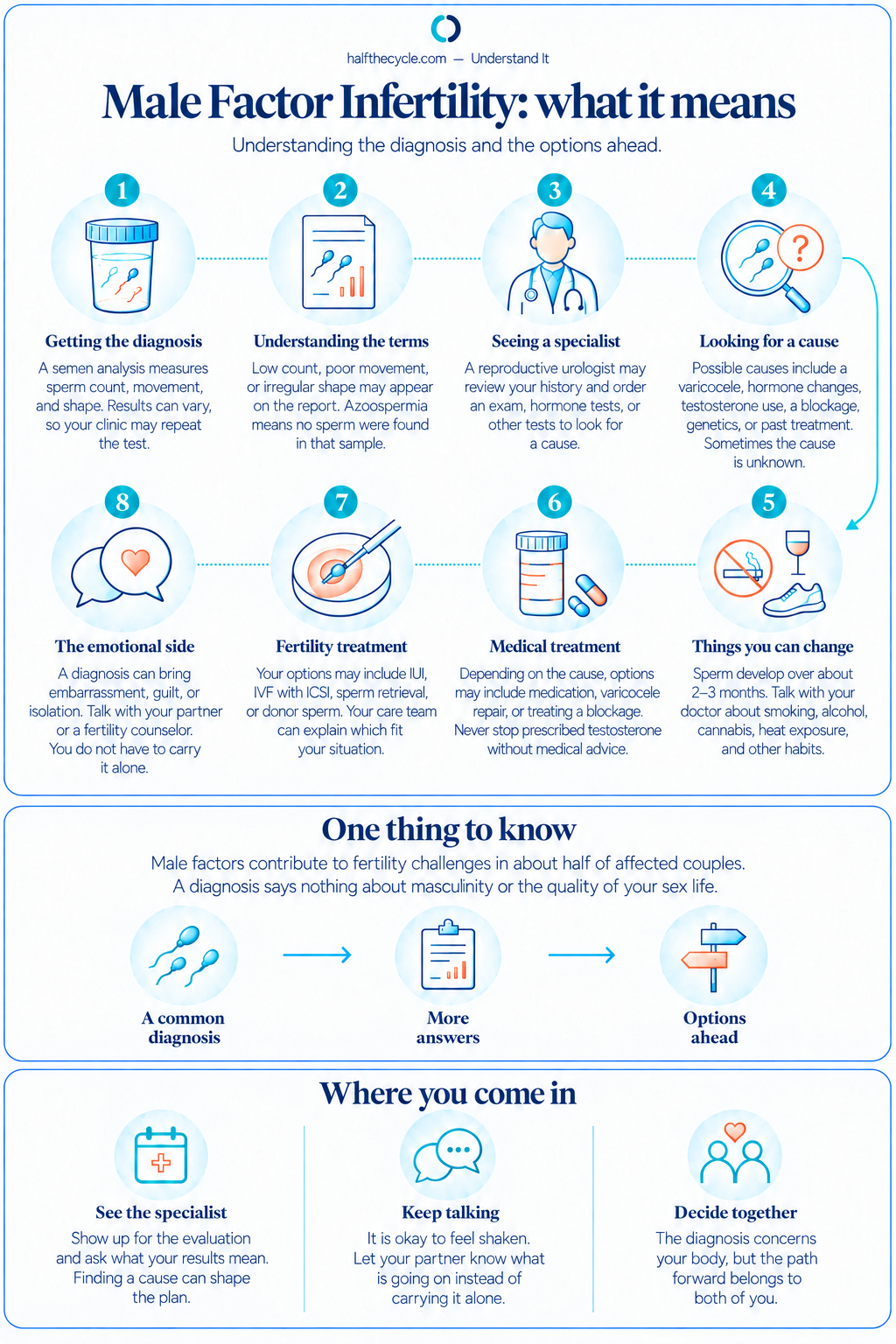
For a lot of couples, fertility testing brings an unexpected result: the challenge isn't only on her side. When a semen analysis or other testing shows a sperm-related issue, doctors call it male factor infertility.
Hearing that can hit hard. Many men feel shock, guilt, or like something about who they are has been questioned. But male factor is common, it's medical, and in many cases it's very treatable. This guide explains what it means, what causes it, and what comes next.
Getting the diagnosis
Male factor is usually flagged by a semen analysis, which measures sperm count, movement, and shape. Because results naturally vary from sample to sample, most clinics repeat the test before drawing conclusions.Understanding the terms
Your report may use words that sound intimidating but describe fairly specific things:Oligospermia: a lower-than-typical sperm count.
Asthenozoospermia: sperm that don't move well.
Teratozoospermia: a high percentage of irregularly shaped sperm.
Azoospermia: no sperm found in the sample. This doesn't always mean no sperm are being made; sometimes they're blocked from getting out.It's common to have more than one of these at once.
Seeing a specialist
Your clinic will likely refer you to a urologist or reproductive urologist, a doctor who specializes in male fertility. Expect a physical exam, blood tests to check hormones like testosterone and FSH, and sometimes a scrotal ultrasound or genetic testing. This workup matters, because finding the cause shapes the treatment.Common causes
Some of the most common causes include:Varicocele: enlarged veins in the scrotum that can raise temperature and affect sperm. It's one of the most common and most treatable causes.
Hormone imbalances: issues with the hormones that signal the body to make sperm.
Testosterone or steroid use: this surprises many men. Taking testosterone, even prescribed, can significantly lower or stop sperm production. Tell your doctor if you use it.
Blockages: from past infections, surgery, a vasectomy, or a condition you were born with.
Genetic factors: certain chromosome differences can affect sperm production.
Past medical treatment: such as chemotherapy or radiation.
Unknown causes: sometimes no specific reason is found, which is frustrating but doesn't rule out treatment.
Things you can change
Sperm take about 2–3 months to develop, so changes you make today can show up in future results. Helpful steps include quitting smoking and vaping, cutting back on alcohol and cannabis, avoiding excess heat like hot tubs and saunas, staying active, and working toward a healthy weight. These aren't guaranteed fixes, but they're worth doing, and it gives you something concrete to act on.Medical treatments
Depending on the cause, a urologist may recommend medication to rebalance hormones, surgery to repair a varicocele, or a procedure to clear a blockage. Stopping testosterone can allow sperm production to recover over time, though this should be done with your doctor's guidance.Fertility treatments
Male factor doesn't always need to be "fixed" for a couple to conceive.IUI: for milder cases, sperm is concentrated and placed directly in the uterus.
IVF with ICSI: a single sperm is injected directly into each egg. ICSI has transformed male factor treatment, because it only takes one healthy sperm per egg.
Sperm retrieval: for some men with azoospermia, a doctor can retrieve sperm directly from the testicle with a minor procedure. Names you might hear include TESE or micro-TESE.
Donor sperm: some couples consider this option if no sperm can be retrieved. It's a personal decision with support available.
The emotional side
This part doesn't show up on a lab report, but it's real. Many men feel embarrassed, responsible, or isolated, and few talk about it. Try not to carry it alone. Talk to your partner, consider a counselor who specializes in fertility, and remember that thousands of men are going through the exact same thing right now.
Questions to ask your urologist
What do you think is causing this?
Is it something that can be treated or improved?
Are there any medications or supplements I should stop or start?
How long before we'd see changes in my results?
What fertility treatments would you recommend for us, and why?