
Counseling for Partners: finding someone who gets it
For a lot of men, counseling isn't the first thing that comes to mind during fertility treatment. It can feel like something meant for her, something for people who are "really struggling," or simply not your style. But fertility treatment puts real strain on partners, too: the stress, the waiting, the grief, the money, the pressure to hold it together. Talking to someone who understands what you're going through can make a big difference, both for you and for your relationship.
One thing to know: You don't need to be in crisis to talk to someone. Many partners find counseling most helpful as a place to think out loud, make sense of hard decisions, or just say the things they can't say anywhere else.
Signs it might help
You feel stressed, irritable, or on edge most of the time
You're having trouble sleeping, focusing, or enjoying things
You feel distant from her, or you're arguing more often
You're holding a lot in and don't have anywhere to put it
You're facing a big decision, like donor options, more cycles, or stopping treatment
You're grieving a failed cycle or loss and feel stuck
You're relying more on alcohol, work, or other ways to escape
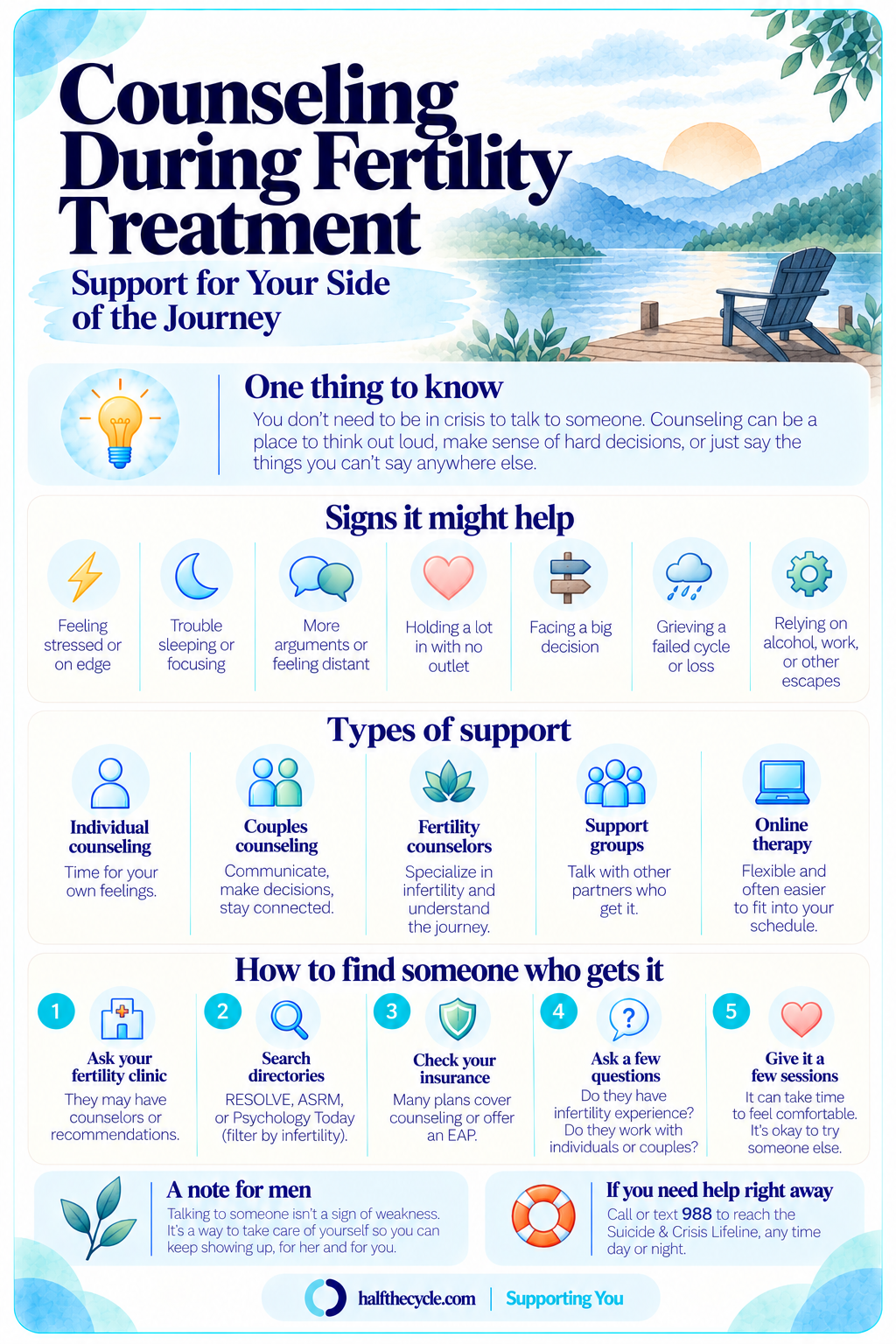
Types of support
Individual counseling
Time just for you, to talk about your own feelings without worrying about how they'll land with her.
Couples counseling
Helps you communicate, make decisions together, and stay connected through the ups and downs of treatment.
Fertility counselors
Therapists who specialize in infertility understand the medical side, the emotional toll, and decisions like donor conception. You won't have to explain what a beta or a transfer is.
Support groups
Talking with other partners who've been there can make you feel much less alone. Some groups are just for men, and many are online.
Online therapy
Video sessions can make it easier to fit counseling around work and appointments, and some men find them more comfortable to start with.
How to find someone who gets it
1. Ask your fertility clinic
Many clinics have counselors on staff or can recommend local therapists who specialize in fertility.
2. Search professional directories
RESOLVE: The National Infertility Association lists support groups, including some for partners.
The American Society for Reproductive Medicine (ASRM) has a directory of mental health professionals who specialize in fertility.
Psychology Today lets you filter therapists by "infertility" and see who's in your area or available online.
3. Check your insurance or work benefits
Your health plan may cover counseling, and many employers offer free, confidential sessions through an Employee Assistance Program (EAP).
4. Ask a few questions before you start
"Do you have experience working with fertility patients or their partners?"
"Do you work with couples, individuals, or both?"
"What does a typical session look like?"
5. Give it a few sessions
It can take a little time to feel comfortable. And if it doesn't feel like the right fit, it's okay to try someone else.
A note for men
Many men put off counseling because they feel they should be able to handle things on their own. But talking to someone isn't a sign of weakness. It's a way to take care of yourself so you can keep showing up for her, and for yourself, through a long and difficult experience.
If you need help right away
If you're feeling hopeless, overwhelmed, or having thoughts of harming yourself, please reach out for immediate support. In the U.S., you can call or text 988 to reach the Suicide & Crisis Lifeline, any time of day.
The bottom line
You don't have to carry this alone. The right counselor or support group can give you space to process, tools to cope, and the reassurance that what you're feeling makes sense.