
Mood Swings: when the hormones are doing the talking
One minute she's fine. The next she's crying at a commercial, snapping about the dishwasher, or certain the cycle is going to fail. Fertility medications change hormone levels quickly and by a lot, and mood changes are one of the most common side effects. Add poor sleep, physical discomfort, and the stress of treatment itself, and it would be strange if her mood stayed steady. It can still be confusing to be on the receiving end, especially when you're trying hard to help.
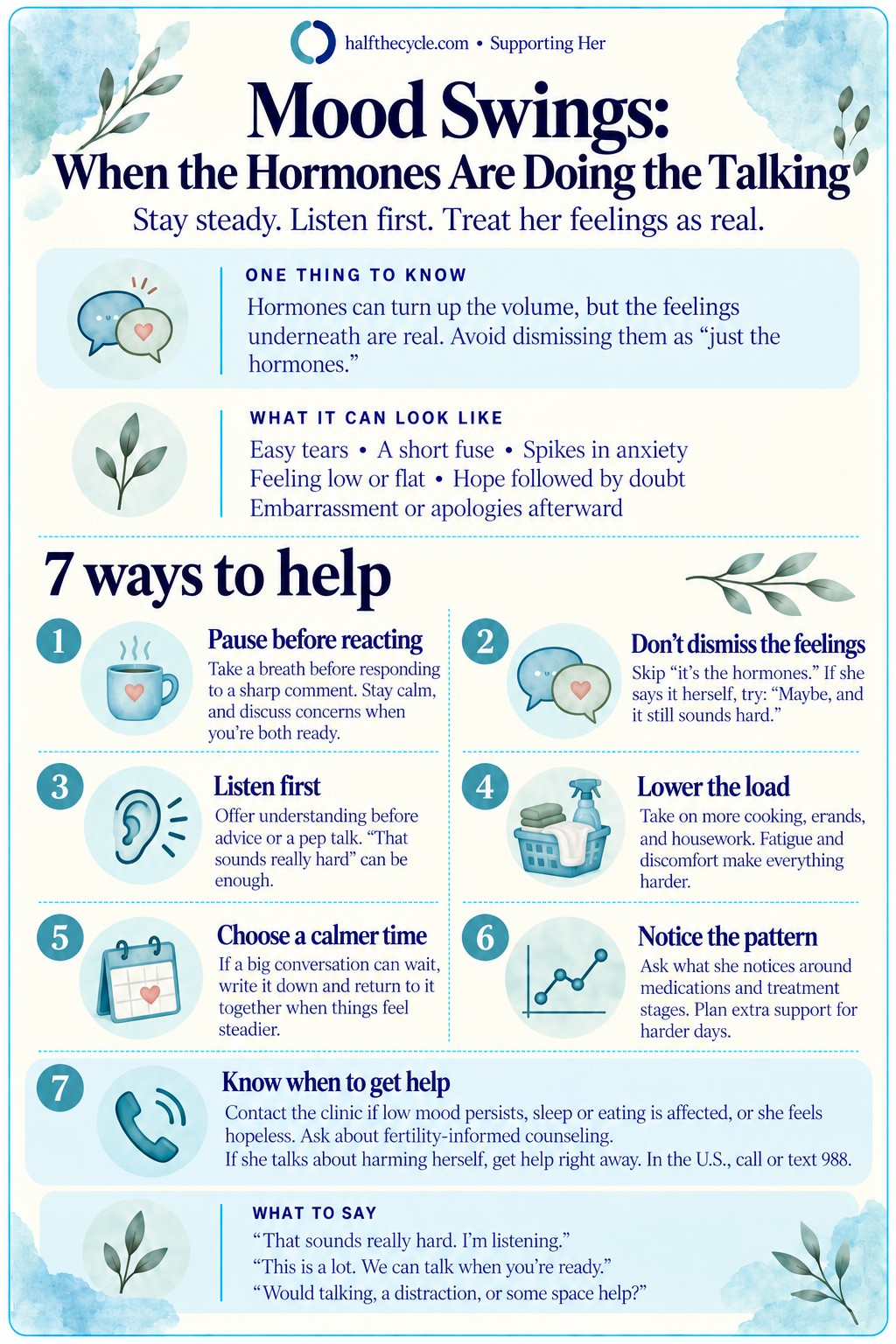
One thing to know: The hormones turn up the volume, but the feelings underneath are real. She isn't being dramatic, and she usually knows when her reaction is bigger than the moment. Telling her "it's just the hormones" is the fastest way to make things worse.
What it can look like
Crying easily, sometimes without knowing why
A short fuse over small things
Anxiety that spikes around appointments and results
Feeling low, flat, or hopeless for a day or two
Swinging between optimism and certainty it won't work
Apologizing afterward, or feeling embarrassed
What helps
1. Don't take it personally
When she snaps about something small, it's rarely about you or the dishwasher. Take a breath before you respond. Not every sharp comment needs an answer, and when she apologizes later, accept it and move on.
2. Never say "it's the hormones"
Even when it's true, it tells her that her feelings don't count. If she says it herself, agree gently: "Maybe, and it still sounds hard."
3. Listen before you respond
Most of the time she needs to be heard. Skip the logic and the pep talk. "That sounds awful" does more than "but the doctor said your numbers look good."
4. Lower the load
Being tired and uncomfortable makes everything harder. Take on more of the cooking, errands, and housework during injections and the two-week wait. Fewer demands on her mean fewer flashpoints for both of you.
5. Hold off on big conversations
The middle of a cycle is a bad time to settle money, in-laws, or what you'll do if this round doesn't work. Unless it truly can't wait, write it down and come back to it.
6. Learn the pattern
Many people notice mood shifts at certain points: as doses build during stimulation, in the days after egg retrieval, and on progesterone during the two-week wait. Knowing when the hard days are likely helps you both prepare for them.
7. Know when it's more than a mood swing
If she's low most of the day for more than a couple of weeks, can't sleep or eat, or talks about feeling hopeless, tell the clinic and ask about a counselor who knows fertility treatment. If she ever talks about harming herself, get help right away. In the U.S., you can call or text 988.
What to say
"That sounds really hard. I'm listening."
"You don't have to apologize. This is a lot."
"What would help right now: talking, a distraction, or some space?"
The bottom line
The medications are temporary, and so are most of the mood changes that come with them. What she'll remember is how you responded. Stay steady, listen first, and treat her feelings as real.