
Fresh vs. Frozen Embryo: what’s the difference?
After egg retrieval, one of the next big questions is when the embryo will be transferred. Some couples do a fresh transfer just days after retrieval, while others freeze their embryos and transfer in a later cycle. Both are common and both can lead to healthy pregnancies. The difference mostly comes down to timing and what's best for her body.
Here's how the two compare:
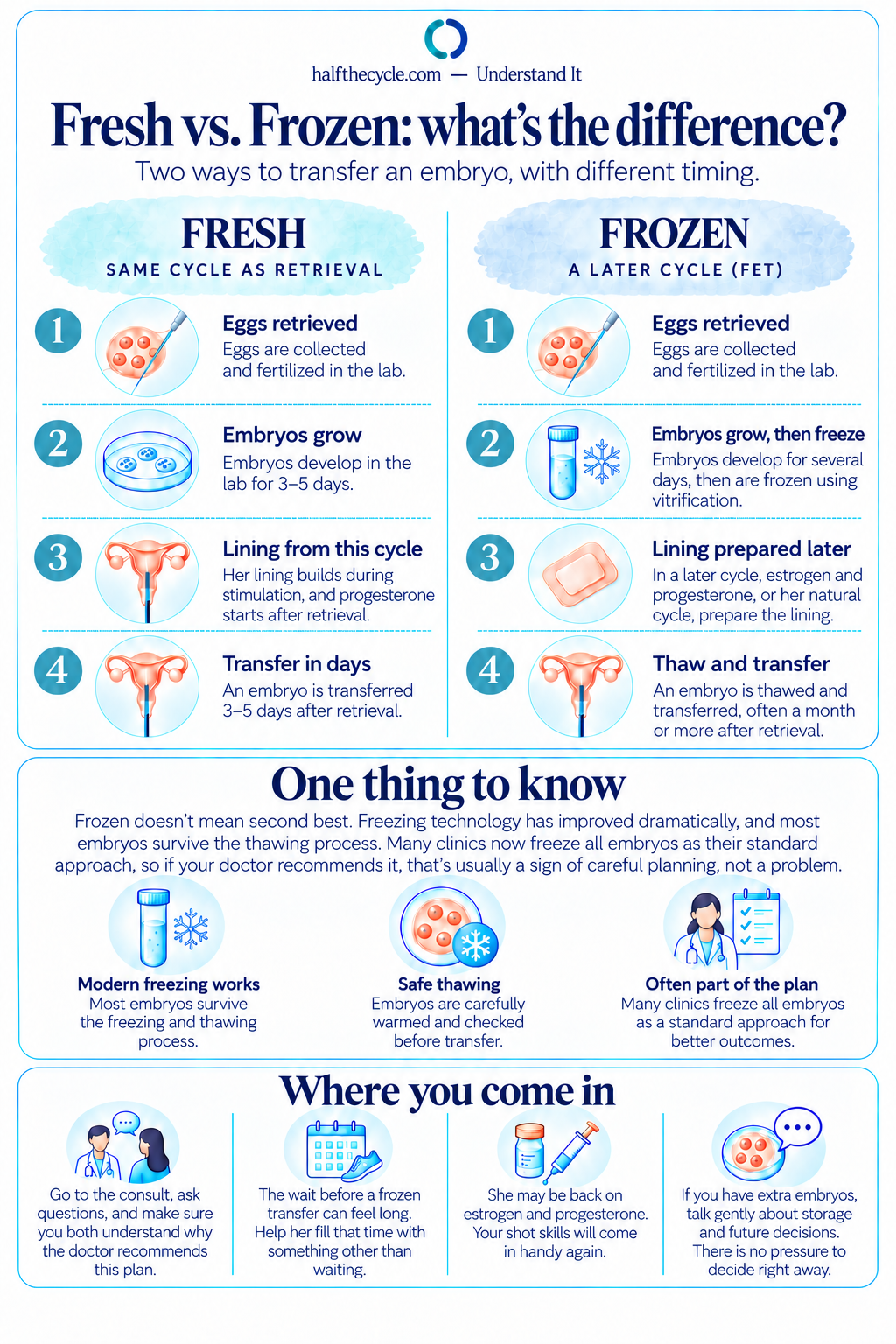
Fresh Transfer
A fresh transfer happens in the same cycle as retrieval, usually 3–5 days later. The embryo goes straight from the lab into the uterus without being frozen. The biggest advantage is time: there's no extra waiting or additional cycle of preparation. The downside is that her body is still recovering from stimulation, and high hormone levels can sometimes make the uterine lining less receptive.Frozen Transfer (FET)
With a frozen embryo transfer, embryos are frozen using a fast-freezing method called vitrification and transferred in a later cycle, often a month or more after retrieval. Before transfer, her uterine lining is prepared, either with medications like estrogen and progesterone or by tracking her natural cycle. This gives her body time to recover and lets the clinic time the transfer when the lining is ready.How Doctors Decide
Your doctor may recommend a frozen transfer if she's at risk for ovarian hyperstimulation syndrome (OHSS), if her hormone levels or lining aren't ideal after stimulation, or if you're doing genetic testing on your embryos, since results take time. A fresh transfer may make sense when everything lines up well and there's no reason to wait. Many clinics simply have a preferred approach, so it's worth asking what theirs is and why.What About Success Rates?
For many patients, success rates for fresh and frozen transfers are similar. For some groups, such as women who responded very strongly to stimulation, frozen transfers may lead to better outcomes. Your doctor can explain what the research means for your specific situation.Cost and Logistics
Frozen transfers can add costs for freezing, storage, and preparing for a separate transfer cycle. They also mean more appointments and medications. On the other hand, freezing extra embryos can give you future transfer options without going through another retrieval.Questions to Ask Your Doctor
Do you recommend a fresh or frozen transfer for us, and why?
If frozen, will we use a medicated or natural cycle?
How long after retrieval would transfer happen?
What are the costs for freezing and storage?
What happens to any extra embryos, and what are our options?