
Fertility Clinic Graduation: what’s next?
For months, maybe years, your fertility clinic has been part of daily life. Then one day, they send you off with a hug. It's a huge milestone. It can also feel like losing your safety net.
Here's what the handoff to an OB looks like, and how to make it feel less like a leap.
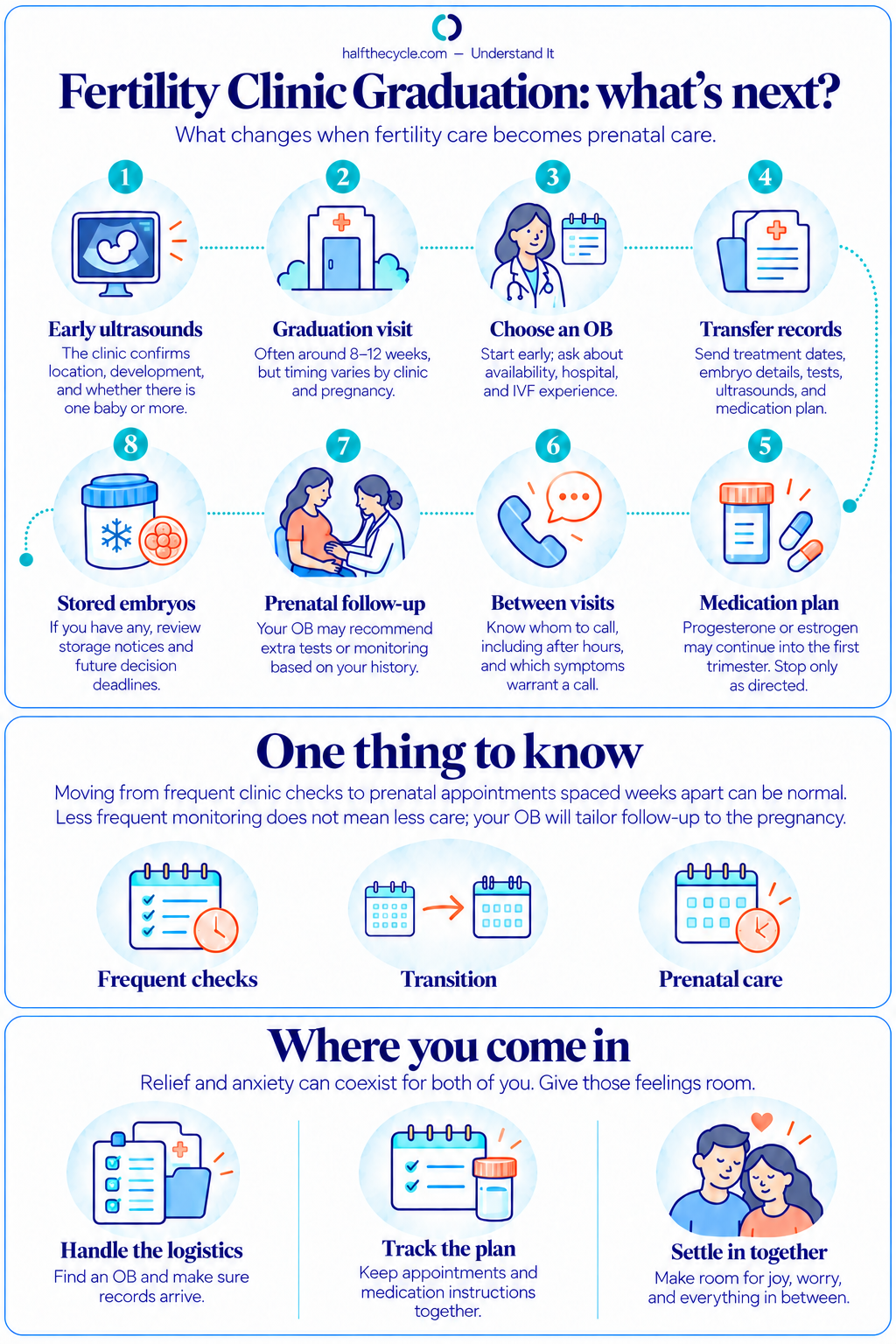
Early ultrasounds at the clinic
After a positive beta, the clinic usually does one or two early ultrasounds to confirm the pregnancy is in the right place, check the heartbeat, and see whether it's one baby or more. These are often the first moments it starts to feel real.Graduation day (usually around 8–12 weeks)
Once the pregnancy is growing well and the heartbeat is strong, the clinic releases her to regular prenatal care. Timing varies by clinic. Some clinics celebrate it, while others make it a simple final appointment. Either way, it's worth marking the moment together.Choosing an OB
Ideally, start looking before graduation so there's no gap. Some things worth asking:Do they have experience with IVF or fertility-treatment pregnancies?
How soon can they see her for a first visit?
Which hospital do they deliver at?
Would they recommend a maternal-fetal medicine (high-risk) specialist, if there's a reason to?
Your fertility clinic can often recommend OBs they work with regularly.
Transferring records
Make sure the OB gets the full picture. Ask the clinic to send:Transfer or IUI date (this is used to set a precise due date)
Embryo details and any PGT results
Bloodwork and ultrasound reports
Current medications and the plan for stopping them
Keep your own copy, too. It's handy for future appointments or a future cycle.
Weaning off medications
Many IVF pregnancies need progesterone, and sometimes estrogen, until around 10–12 weeks, when the placenta takes over hormone production. The clinic or OB will give a tapering plan. She shouldn't stop anything on her own, even if it feels like the pregnancy is well established.The gap before the first OB visit
This is where many couples feel the most anxious. There may be a couple of weeks with no appointments and no one checking in. A few things that help: knowing the OB's after-hours number, having a clear list of symptoms that warrant a call, and filling the time with plans rather than waiting.7. What's different about a pregnancy after fertility treatment
Most IVF pregnancies go on to be healthy, typical pregnancies. Because pregnancies after fertility treatment can carry slightly higher risk for some conditions, her OB may recommend extra monitoring or tests along the way. That's a precaution, not a warning sign.8. Deciding about remaining embryos
If you have embryos still frozen, you'll get storage bills and eventually decisions to make. There's no rush right now, but it's good to know the clinic will stay in touch about them.The emotional side of graduating
Pregnancy after infertility doesn't always feel the way people expect. Some couples hold off on telling friends and family, buying anything, or letting themselves get excited. Others feel guilty around friends still in treatment. All of that is normal. Go at your own pace, and if the anxiety feels heavy, it's okay to ask the OB about support resources.