Embryo Transfer: step-by-step
After weeks of injections, monitoring appointments, and waiting on embryo reports, transfer day can feel like the finish line. In some ways it is: it's the moment an embryo is placed in the uterus with the hope that it implants. In other ways, it's the start of a new stretch of waiting.
The procedure itself is quick, often over in about 10 to 15 minutes, and usually doesn't require anesthesia. But the emotional weight of it is enormous. This guide walks through what happens before, during, and after, so you know what to expect and where you can show up.
Here’s what to expect, step by step:
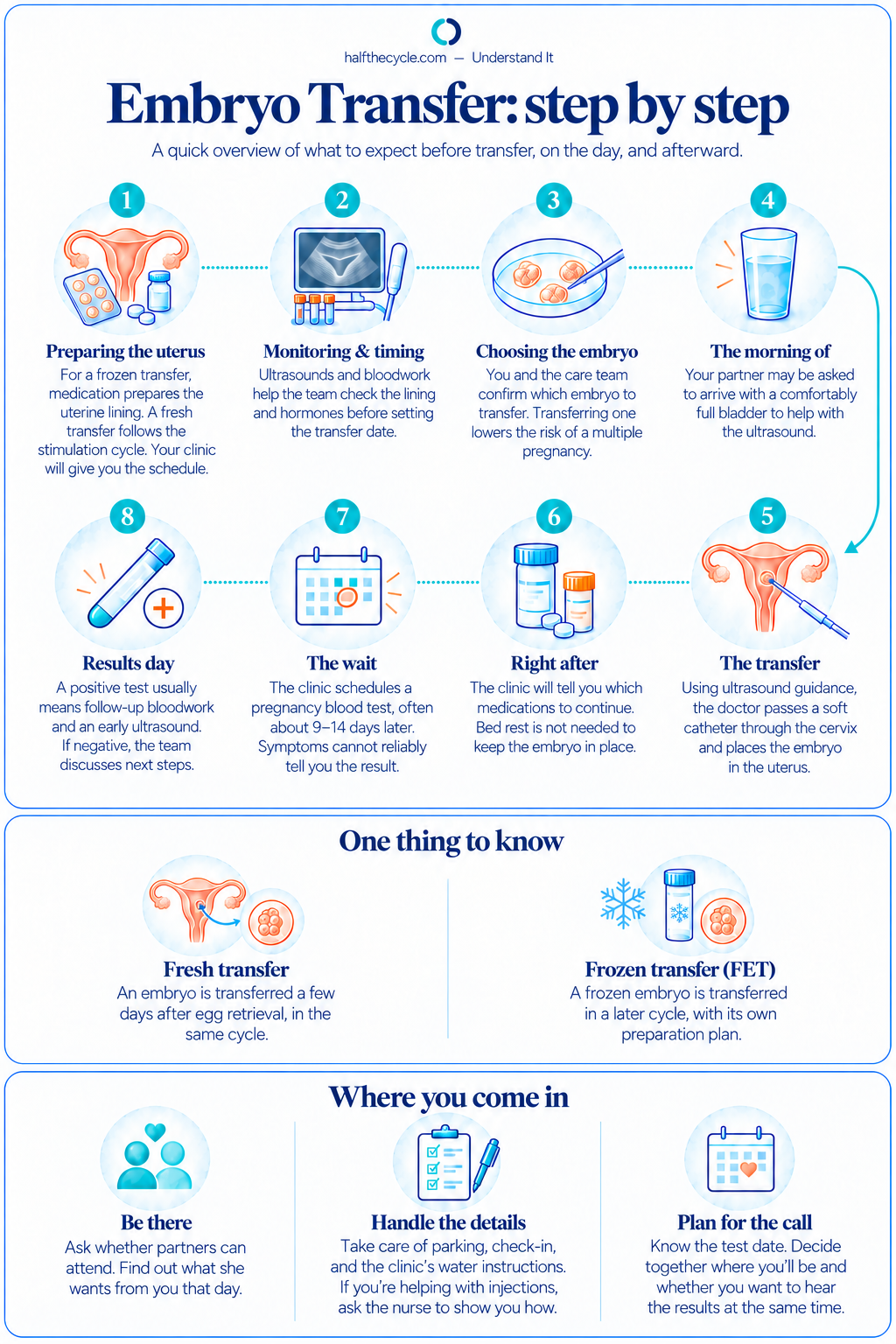
Preparing the uterus
For a frozen transfer, the goal is to get the uterine lining thick and receptive. This usually means estrogen (pills, patches, or injections) for a couple of weeks, followed by progesterone, which is often a daily intramuscular injection or vaginal suppository. For a fresh transfer, her body is already primed from the stimulation cycle. Partner tip: Progesterone-in-oil shots go into the upper buttock and many partners give them. Ask the nurse to show you how. It's a real, concrete way to help.Monitoring and scheduling
She'll have ultrasounds and bloodwork to check the lining and hormone levels. Once everything looks right, the clinic sets the transfer date and time. Embryo timing matters, so this is usually not something you can move around.Choosing the embryo
You and your doctor decide how many embryos to transfer. Many clinics now recommend a single embryo transfer to lower the risks of a multiple pregnancy. If you did PGT testing, this decision may be guided by those results. It's okay to ask questions here. This is a shared decision.The morning of
She'll usually be asked to arrive with a comfortably full bladder, which helps the doctor see the uterus clearly on ultrasound. Some clinics also recommend a medication to help her relax. Wear comfortable clothes, and plan to arrive a little early.The transfer itself
She lies back, much like during a Pap smear. Guided by an abdominal ultrasound, the doctor passes a thin, soft catheter through the cervix and gently releases the embryo into the uterus. Many clinics show the embryo on a screen beforehand, and you may see a tiny flash of light on the ultrasound as it's placed. Some couples take a photo of that moment. It's usually painless, though the full bladder and speculum can be uncomfortable.Right after
She'll typically rest for a few minutes before going home. Clinics vary on activity guidelines afterward, so follow your clinic's specific instructions and don't rely on internet advice. Progesterone support usually continues for weeks.The two-week wait
The pregnancy blood test (a beta hCG test) is usually scheduled around 9 to 14 days after transfer. Early symptoms, or the lack of them, don't reliably mean anything, because the progesterone she's taking can cause pregnancy-like symptoms on its own. Many clinics discourage home pregnancy tests during this window because the results can be misleading.Results day
The clinic calls with the beta results. A positive result usually means follow-up blood tests to confirm the numbers are rising, then an early ultrasound. If the result is negative, your care team will talk through next steps with you. Plan for the call. Decide together where you'll be and whether you'll hear it together.