
Saying the Wrong Thing: how to repair it
At some point during fertility treatment, almost every partner says something that lands wrong. Maybe you tried to stay positive and it came out dismissive. Maybe you were tired and frustrated and said something you didn't mean. Or maybe you said nothing at all when she needed you to say something. It happens because this is hard, emotions run high, and there's no script. What matters most isn't getting every word right. It's knowing how to repair things when you don't.
One thing to know: Hormones, stress, and grief can make anyone more sensitive, including you. A comment that would normally roll off can hit hard during treatment. That doesn't mean she's overreacting or that you're getting it wrong all the time. It means you're both carrying a lot.
Common things that can land wrong
Most of these come from a good place, which is exactly why they're so easy to say:
"Just relax, it'll happen." It can feel like stress is being blamed for the outcome.
"At least we have more embryos" or "At least it's early." "At least" tends to shrink a real loss.
"We can always adopt" or "We can try again." Jumping ahead can make it seem like you're skipping past what she's feeling now.
Trying to fix it right away. Offering a plan before she feels heard.
Comments about cost, time, or her body, even offhand ones.
Saying nothing. Silence can feel like distance, even when you're just trying not to make it worse.
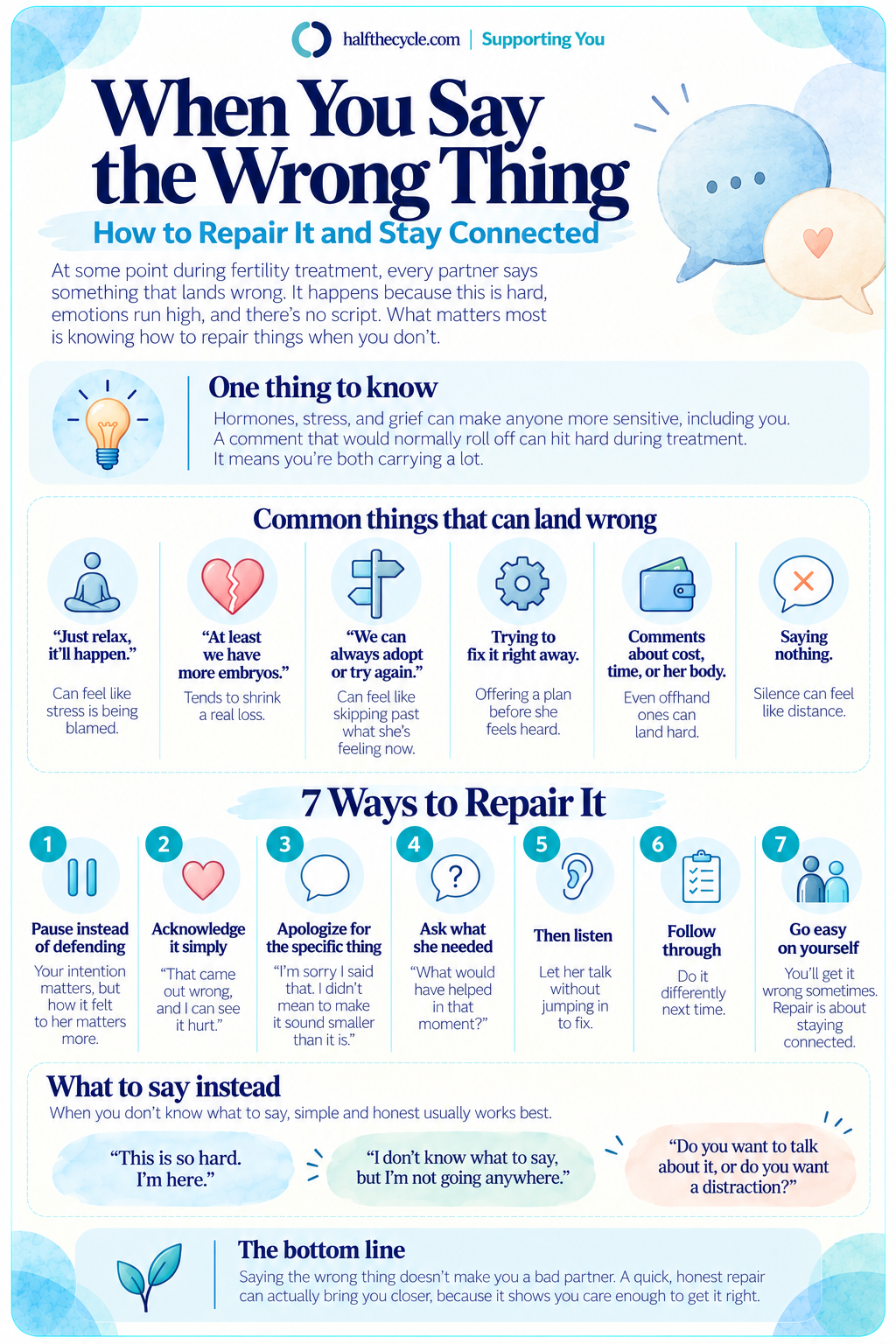
How to repair it
1. Pause instead of defending
When something lands wrong, the first instinct is to explain what you meant. Hold off. Your intention matters, but in the moment, how it felt to her matters more.
2. Acknowledge it simply
Something like "That came out wrong, and I can see it hurt" is often enough to lower the temperature. You don't need a long speech.
3. Apologize for the specific thing
"I'm sorry I said 'at least.' I didn't mean to make it sound smaller than it is" means more than a general "Sorry if I upset you."
4. Ask what she needed
"What would have helped in that moment?" shows you want to understand, and gives you a better sense of what to say next time.
5. Then listen
Let her talk without jumping in to correct or fix. Sometimes repair is mostly just being willing to hear it.
6. Follow through
The best repair is doing it differently next time. If she tells you she needs you to just listen after a hard call, try that the next time a hard call comes.
7. Go easy on yourself
You're going to get it wrong sometimes. So will she. Repair isn't about being perfect. It's about staying connected through the hard moments, and that's something you can get better at together.
What to say instead
When you don't know what to say, simple and honest usually works best:
"This is so hard. I'm here."
"I don't know what to say, but I'm not going anywhere."
"Do you want to talk about it, or do you want a distraction?"
The bottom line
Saying the wrong thing doesn't make you a bad partner. Not repairing it is what creates distance. A quick, honest repair can actually bring you closer, because it shows her you're paying attention and you care enough to get it right.