
Guilt and Resentment: the feelings no one admits
Some feelings during fertility treatment are easy to talk about: hope, worry, sadness. Others are much harder to admit, even to yourself. You might feel guilty that she's going through the physical side while you're not, or guilty if male factor is part of the picture. You might also feel resentment, about life being on hold, about money, about how much everything now revolves around treatment. Then you feel guilty for feeling resentful. These feelings are far more common than most partners realize, and having them doesn't make you a bad person or a bad partner.
One thing to know: Feelings aren't actions. Guilt and resentment are normal reactions to a long, stressful, often unfair experience. What matters is what you do with them, and the healthiest first step is simply admitting they're there.
What guilt can look like
Feeling bad that she's carrying the injections, procedures, and side effects
Blaming yourself if male factor is involved
Feeling relieved when a cycle is postponed, then guilty about it
Wanting to stop treatment before she does
Feeling guilty for enjoying something while she's struggling
What resentment can look like
Frustration that life, plans, or careers feel on hold
Stress or anger about how much treatment costs
Feeling like your needs always come second
Missing the relationship you had before treatment, including intimacy that now feels scheduled or tense
Frustration with her moods, even when you know the hormones play a part
Envy toward friends who got pregnant easily
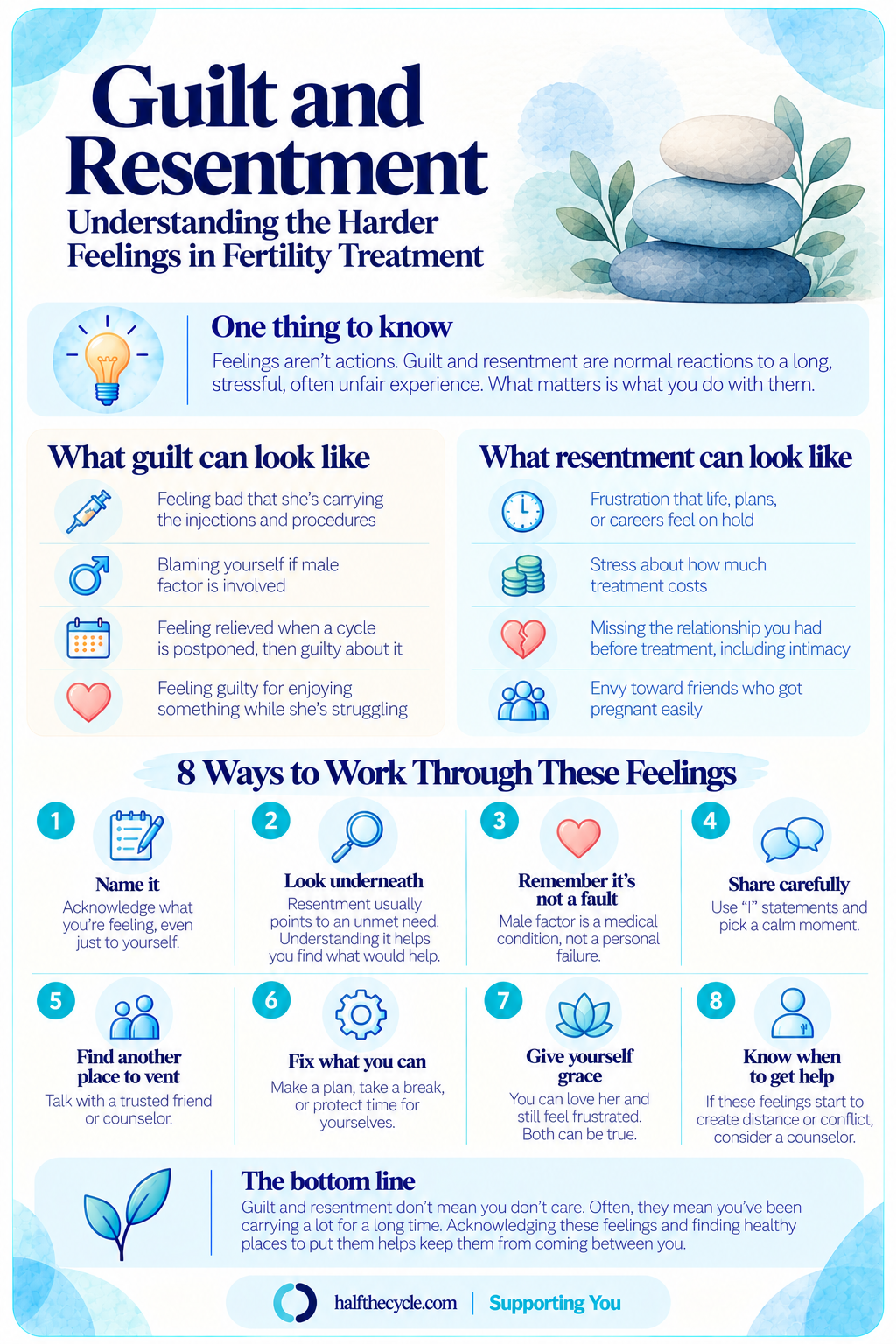
What helps
1. Name it, at least to yourself
Pushing these feelings down tends to make them stronger. Simply saying "I'm feeling resentful about this" in your own head, or writing it down, can take away some of its power.
2. Look for what's underneath
Resentment usually points to an unmet need, like rest, connection, time for yourself, or a sense of control. Guilt often comes from caring deeply and feeling powerless. Figuring out what's really going on helps you find what would actually help.
3. Remember that male factor isn't a fault
If male factor is part of your diagnosis, it's a medical condition, not a personal failure. Infertility is no one's fault, and it's a shared challenge you're facing as a couple.
4. Share carefully, and at the right time
Some of these feelings are worth talking about with her, especially the ones about missing your relationship or feeling stretched thin. Use "I" statements, like "I miss us just having fun together," rather than blame. Pick a calm moment, not right after a hard appointment.
5. Find another place to vent
Some feelings, especially frustration with her or with treatment, may be better worked through with a friend, another partner who's been through it, or a counselor first. That way they don't land as blame.
6. Fix what you can
Some resentment has practical solutions. Make a financial plan together, take a planned break between cycles, protect one night a week that's not about treatment, or make time for something that's just yours.
7. Give yourself some grace
You can love her deeply, want this badly, and still feel frustrated or tired. All of it can be true at once.
8. Know when to get help
If guilt or resentment starts to turn into anger, distance, or contempt, or if it's affecting how you treat each other, a counselor who understands fertility treatment can help you work through it before it builds.
The bottom line
Guilt and resentment don't mean you don't care. Often, they mean you've been carrying a lot for a long time. Acknowledging these feelings, and finding healthy places to put them, helps keep them from quietly coming between you.